
By Cottage Grove Pipe Repair · Published November 3, 2026
Preventing Frozen Pipes in Minnesota Winters
Pipes in exterior walls, crawl spaces, and garages are the most likely to freeze when temperatures drop well below zero. Minnesota winters make this a yearly risk, not a rare one — and a little preparation before the first hard freeze can save you a costly repair and a flooded home. Most of these steps cost little or nothing and take an afternoon — far less than a single emergency repair.
Why pipes freeze in Minnesota
Water freezes at 32 degrees, so any pipe whose surrounding air reaches freezing is at risk. As a rule of thumb, pipes become vulnerable when outdoor temperatures drop to 20 degrees or below and stay there for six or more hours — conditions Minnesota sees many times each winter.
Copper pipes are the most likely to crack when they freeze because the metal has almost no give: ice expands inside the line and splits the wall. PEX tubing can flex as ice forms, which is why it survives freezes far more often — but it is not freeze-proof, and its fittings can still fail. Older galvanized lines, already narrowed by corrosion, have even less room before they crack.
Insulate the vulnerable spots
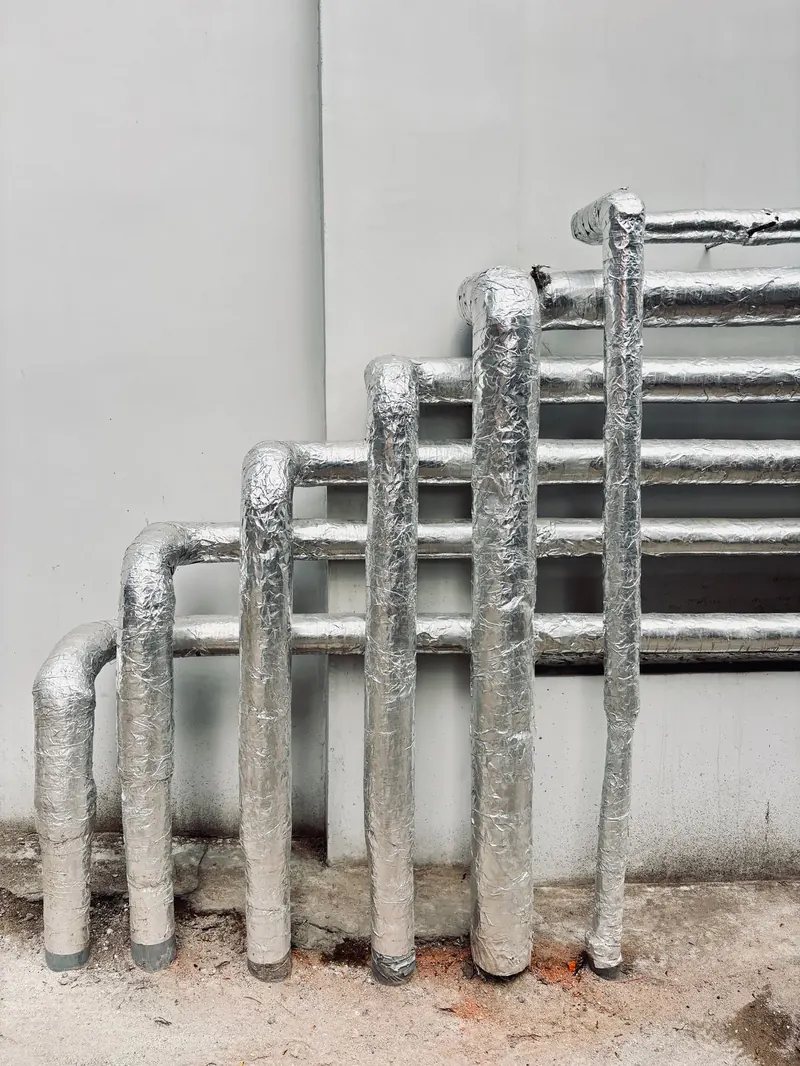
Add foam pipe sleeves to exposed lines in basements, crawl spaces, and attics. The sleeves cost a few dollars per length and take minutes to fit — they are the best value in winter plumbing protection.
Seal drafts around pipes that run through exterior walls, and use caulk or spray foam where cold air leaks in. Pay special attention to rim joists, the band of wood where the wall meets the foundation — cold air pours through gaps there and hits the pipes first. Insulating the pipe is only half the job; stopping the cold air is the other half. If the job is bigger than a few sleeves — a full crawl space, or an older home with exposed runs everywhere — our pipe insulation and winterization service can handle it before the first hard freeze.
Keep a steady, warm temperature
Keep your thermostat at 55 degrees or higher, even when you are away for the weekend. Turning the heat down to save money while you are gone is one of the most common causes of frozen pipes — the savings are a few dollars, and a burst costs thousands.
Open cabinet doors under kitchen and bathroom sinks on cold nights so warm air reaches the pipes against exterior walls. If a sink is on an outside wall and the forecast calls for subzero temperatures, this small habit makes a real difference.
Let water move
On the coldest nights, let faucets on exterior walls drip slowly. Moving water is much harder to freeze, and a slow drip relieves pressure in the line — which is what actually causes most bursts. A drip costs pennies in water compared with a repair bill.
If you have a faucet that has frozen before, drip that one first. And do not forget the basement: a laundry tap on an outside wall is easy to overlook and just as vulnerable as a kitchen sink.
Winterize outdoor plumbing
Disconnect garden hoses before the first hard freeze and close the indoor shutoff valves for outdoor spigots. A hose left connected traps water in the spigot, which freezes, expands, and can split the pipe inside the wall — a leak you will not see until spring.
If you have an irrigation system, have it blown out before winter. And if your home has a hose spigot without a shutoff valve inside, consider having a frost-free sillcock installed — it shuts the water off deep inside the warm part of the wall.
Going away for the winter?
If you leave for weeks at a time, shut off the main water supply and drain the lines by opening the lowest faucet in the house. With no water in the pipes, there is nothing to freeze. Keep the heat at 55 degrees or higher so the house itself does not freeze.
Ask a neighbor or friend to check the house every few days. A quick walk-through can catch a furnace failure or a leak before it becomes a disaster. A smart thermostat that alerts you if the temperature drops is a cheap backup that pays for itself the first time it warns you.
Signs a pipe is about to freeze
The earliest warning is reduced water flow: if a faucet that normally runs strong starts to trickle on a cold morning, ice is already narrowing the line. Frost on an exposed pipe, or a strange smell from a faucet — ice can trap odors in the line — are other signs.
If you suspect a line is freezing, open the faucet it feeds and apply gentle heat with a hair dryer, starting from the faucet end and working back. If the flow does not return, call a plumber before the ice turns into a burst.
Know where your main shutoff is
Before winter, find your main water shutoff valve and make sure it turns freely. If a pipe does freeze, shutting off the water quickly limits the damage when the ice thaws and the line cracks.
Show every adult in the household where the valve is. In an emergency, the person who finds the leak is rarely the one who knows where the shutoff is — a two-minute tour in November can save thousands of dollars in January.
If a line freezes despite your preparation, our frozen pipe repair and thawing service can thaw it safely — and if it has already split, our burst pipe repair in Cottage Grove team handles the emergency repair.
Frequently asked questions
At what temperature do pipes freeze?
Pipes become vulnerable when outdoor temperatures drop to 20 degrees Fahrenheit or below and stay there for six or more hours. Pipes in exterior walls, crawl spaces, and garages freeze first, because the air around them reaches freezing fastest.
Should I drip hot water, cold water, or both?
Drip the faucets on exterior walls — cold taps first, since cold lines freeze most often, and hot taps too if the hot line runs through an outside wall. A slow drip is enough: moving water is much harder to freeze, and the drip relieves pressure in the line.
Does pipe insulation alone stop pipes from freezing?
Insulation slows heat loss, but it does not add heat — on a long subzero stretch, an insulated pipe in a cold space can still freeze. It works best combined with the other steps here: steady indoor heat, sealed drafts, and a slow drip on the coldest nights.